

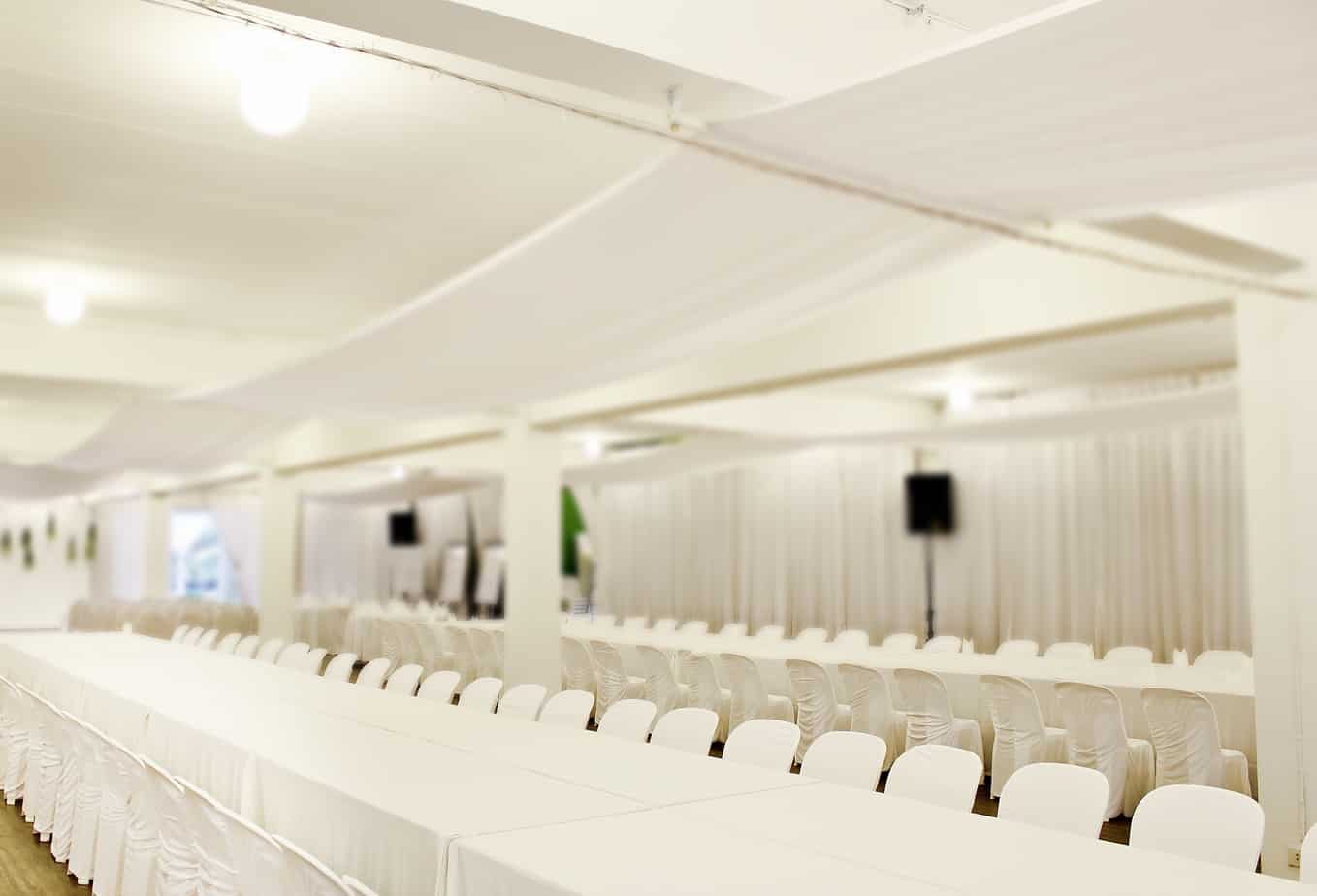
There is a distinct moment when a wedding guest list stops being a social gathering and becomes a census. When your headcount reaches triple digits, it’s essential to have an airtight infrastructure that keeps a crowd that size moving. At this scale, you’re no longer a host; you are a project manager.
By approaching your planning with the same focus you’d use for a major home renovation, you can strip away the noise and focus on what actually works. Here is how to manage the “Big Day” without letting the scale overwhelm the sentiment.
1. Respect the Timeline (and Your Sanity)
In large-scale events, time is your most valuable currency. Rushing leads to panic-buying and settling for available vendors rather than the right ones.
- The Golden Rule: Start planning at least 12 to 14 months out.
- Vendor Leverage: Top-tier local caterers and bands book up fast. Early birds get their pick and the best contract terms.
- Financial Breathing Room: A longer runway allows you to stagger deposits, making a six-figure event feel significantly less like a financial ambush.
2. Choose One “North Star”
When weddings scale up, details can get lost in the crowd. Instead of trying to make 40 different elements “perfect,” pick one high-impact feature to anchor the experience. This “North Star” becomes what guests actually remember.
- The Impact Piece: Think architectural floral installations using native California greenery, or a professional-grade LED lighting design that fundamentally shifts the room’s mood at sunset.
- The Benefit: By pouring your creative energy into one standout element, you simplify your decision-making for everything else.
3. Build a Buffer for Imperfection (The 95% Rule)
Success in a production this size doesn’t come from a perfect spreadsheet; it comes from being cool and calm when the spreadsheet inevitably glitches. Realize early on that perfection is a moving target. Instead, aim for the 95% Rule: if the vast majority of the event flows as intended, it is a resounding success.
Here are three ways to apply that philosophy to a large-scale wedding:
- Audit Your Priorities: Identify the “Non-Negotiables” (like guest comfort, food quality, and sound) that make up your 95%. If the napkins are the wrong shade of ivory or the cocktail napkins didn’t arrive, let those fall into the “5% Margin” without a second thought.
- The “Five-Minute” Buffer: Accept that with hundreds of people, transitions like moving from ceremony to reception will naturally take longer than planned. Build a 5% “time tax” into your itinerary so a slight delay doesn’t trigger a logistical domino effect.
- The Composure Proxy: Understand that your demeanor is a logistical tool. If you react to a minor 5% hiccup with grace and a quick fix from your emergency kit, your guests will remain immersed in the celebration. Your calm signals that everything is going to plan.
4. Prioritize Your Budget
You cannot have the “best of everything” at a large scale without an infinite budget. You must decide where your money has the most impact.
Rank your top three categories and fully fund them. For everything else, “good enough” is perfectly acceptable.
- If you value music and dancing, then prioritize paying for a professional DJ or top-tier band. Save on the elaborate party favors.
- If you want the food to be extra special and memorable, prioritize premium catering.
- If you value great photography, spend your money on elite photography, and simplify the multi-course meal.
5. Conduct a Tactical Site Visit
A venue’s Instagram feed is a curated highlight reel; you need to see it in person. And when you do visit in person, look past the aesthetic and check the “infrastructure.”
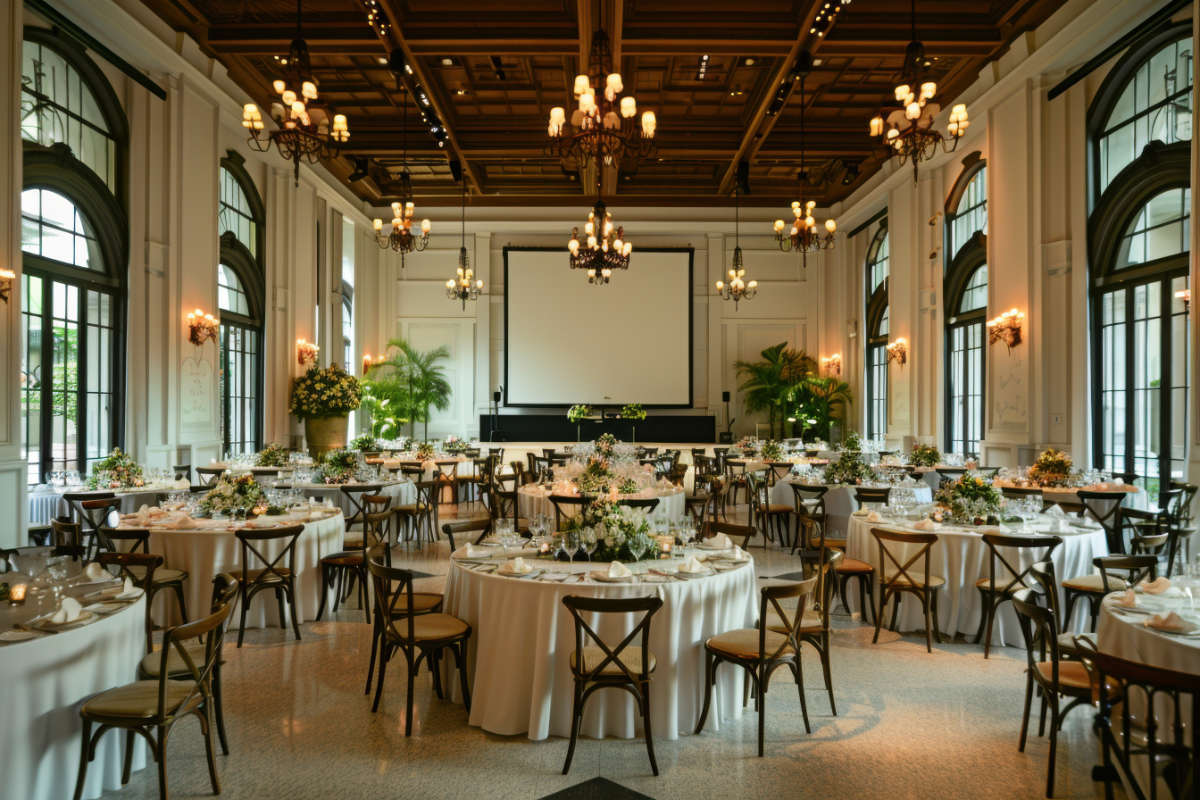
- The “Flow” Test: Can 300 people move toward the buffet without a bottleneck?
- The Power Check: High-end lighting and sound systems pull significant power. Ask the manager if the circuits can handle a full production without tripping a breaker.
- The Logistics: Check for local noise ordinances, parking capacity, and, crucially, the ratio of restrooms to guests.
6. Embrace the Power of Simplicity
Complexity is the enemy of execution. At a large wedding, hyper-intricate table settings and small DIY favors often become “clutter” that guests overlook.
- Lean on the pros. A reputable rental company doesn’t just provide chairs; they provide the logistical backbone of your event.
- By choosing clean, elegant designs and trusting experienced vendors to handle the heavy lifting, you free yourself up to actually be present at your own wedding.
Plan Your Big Event With Confidence
Scaling up your wedding doesn’t have to mean scaling up your stress. By treating the logistics with professional rigor—prioritizing your “North Stars,” respecting the timeline, and leaning on local experts—you shift from being a stressed-out coordinator to a confident host.
Remember, the goal of all this preparation isn’t just to manage a crowd; it’s to create a space where you can actually be present. When you trust your strategy and your vendors, you’re free to enjoy the moments that matter most. Every thoughtful decision you make now is an investment in a seamless, unforgettable celebration later.
Your Immediate Mission
With a clear vision and a solid outline, you’re more than ready to start planning the event of the season.
- Identify your top three non-negotiable priorities.
- Shortlist your local must-have vendors.
- Schedule that first in-person venue tour.
FAQs: Planning a Large Wedding
Q: How many guests constitute a “large” wedding?
In the industry, once you cross the 150-guest mark, you’ve moved into large-scale territory. Events with 200 to 300 guests require a different tier of logistical planning, specialized staffing ratios, and significantly higher rental quantities than a standard gathering.
Q: Can I realistically host 200+ people in a backyard?
It is possible, but treat it like a construction project. You aren’t just hosting a party; you are building a temporary venue. You will need to bring in the “infrastructure” guests take for granted: power generators for the caterer, luxury portable restrooms, and professional flooring to ensure the ground stays level under the weight of a crowd.
Q: How do I manage a budget for a massive guest list?
The most effective strategy is the “Rule of Three.” Pick three main elements—typically food, photography, and the venue—and fully fund them. For secondary items like signage, favors, or table numbers, use cost-effective local solutions. Sourcing materials nearby also eliminates the hidden costs of shipping and heavy-duty transport.
Q: What is the most efficient way to feed a large crowd? Is it acceptable to have a buffet or serve family-style?
Plated service for a large crowd is elegant, but it is also slow and requires a small army of waitstaff. Buffets allow guests to control their own pace and portion sizes, which significantly reduces both “hangry” guests and food waste.
Q: Do I really need a professional coordinator?
For a large wedding, a day-of coordinator isn’t a luxury; it’s an insurance policy. On a day with hundreds of moving parts, you should be the guest of honor, not the point of contact for a florist who can’t find the loading dock or a DJ with a blown fuse.
Q: How do I keep a large wedding sustainable?
Scale doesn’t have to mean waste. You can boost sustainability by using energy-efficient LED lighting, opting for high-quality rentals (reusable glass and linen) instead of disposables, and sourcing your menu locally. You can also arrange for a local charity to pick up leftover food or floral arrangements.
Q: How do I prevent a bottleneck at a large event?
Traffic flow is the silent scourge of big weddings. To keep the energy high, avoid “single-point” services. Have two bars instead of one, two buffet lines, and ensure the dance floor is central so guests don’t feel marooned at their tables.
Q: When should the invitations go out for a big guest list?
Precision timing is key for logistics. Send your Save-the-Dates six to eight months in advance. Mail the formal invitations eight to ten weeks before the wedding. This gives your guests time to make travel arrangements and gives you a firm headcount in time to finalize your rental orders without last-minute rush fees.





Leave A Comment